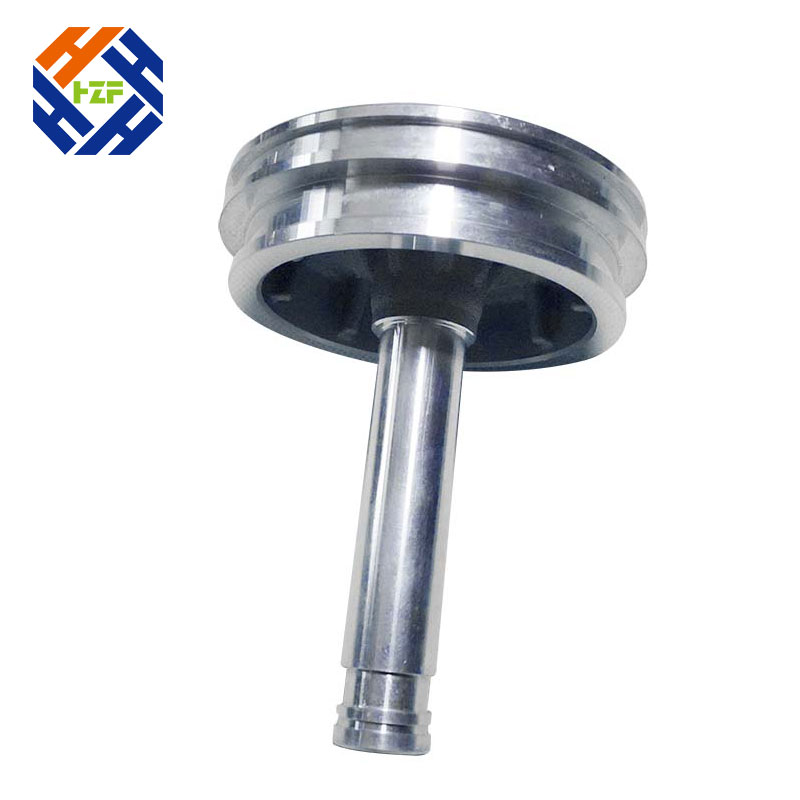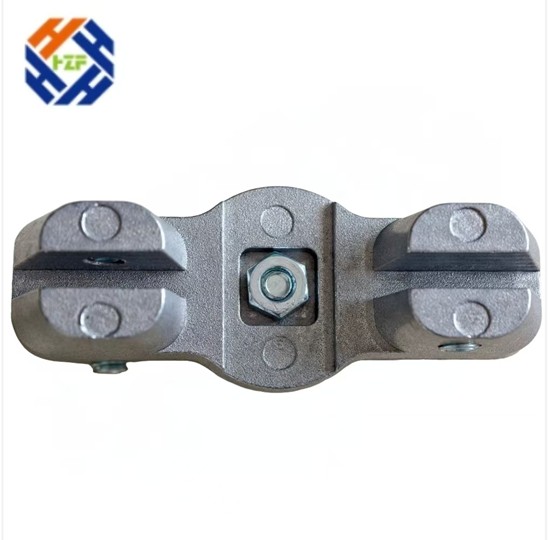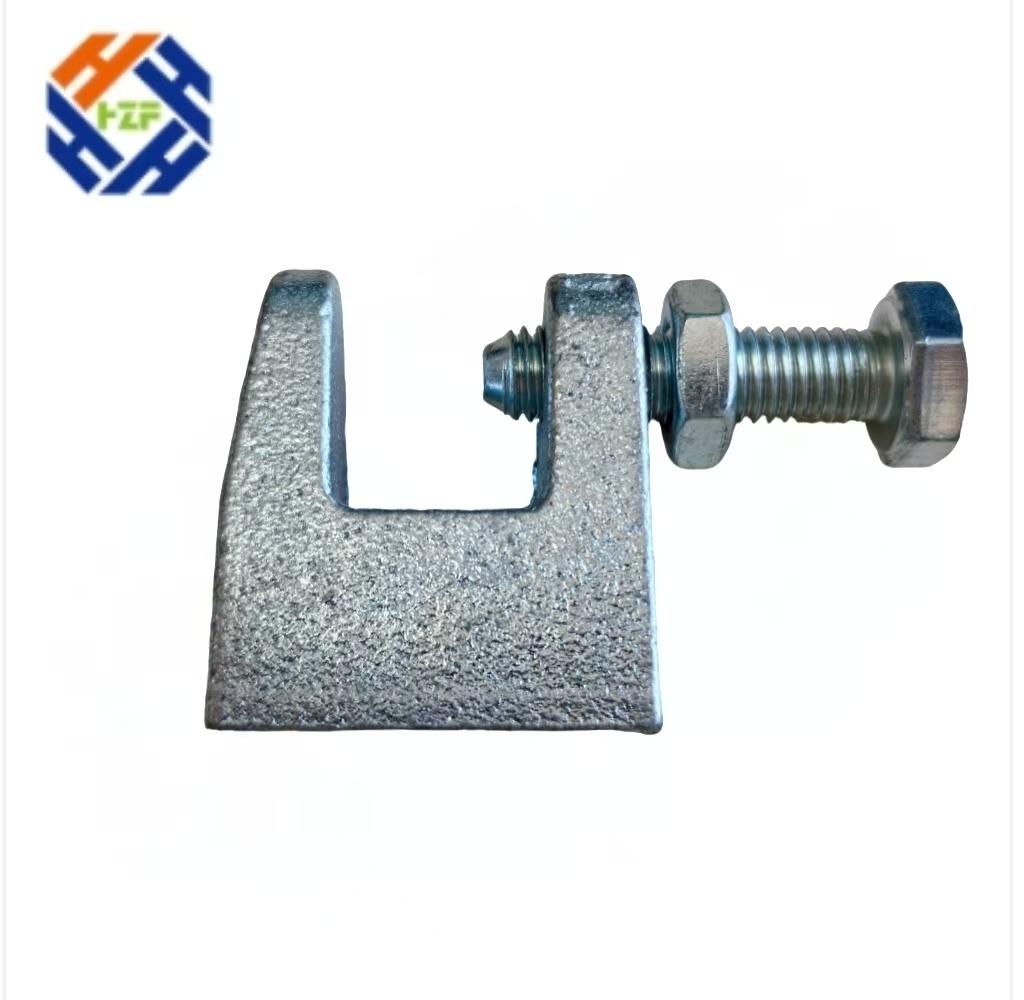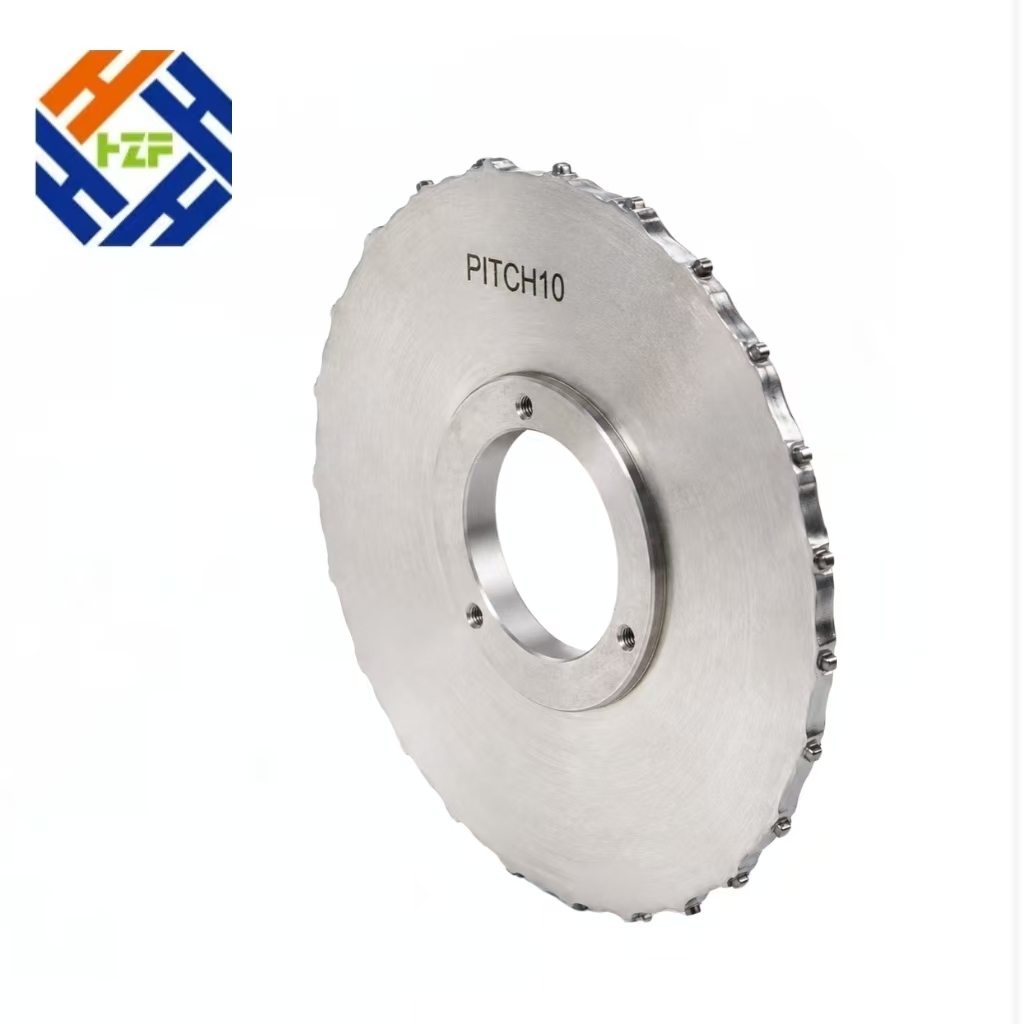
Market demand for custom CNC machined parts is rising rapidly. Haozhifeng Machinery provides high precision custom CNC machining services for global clients, helping enterprises complete the full manufacturing workflow from sample development and small‑batch trial production to mass production. Statistics show that the global precision component market reached USD 98.7 billion in 2025 and is projected to exceed USD 106.4 billion in 2026, representing a year‑on‑year growth of approximately 7.8%. This growth is not merely a simple market shift, but a result of the manufacturing industry setting higher requirements for product performance, structural design and production efficiency.In sectors including aerospace, new‑energy vehicles, medical equipment and industrial automation, standard parts are increasingly unable to satisfy practical application requirements. Distinct equipment has obvious differences in structural space, stress‑bearing environment and assembly methods. Enterprises need more than just installable parts; they demand solutions that precisely match equipment performance requirements.Accordingly, custom CNC machining has become a vital manufacturing method for high‑precision, high‑reliability components.This article analyzes the primary drivers behind rising demand for custom CNC machined parts from technical, production‑mode and supply chain perspectives.
Modern‑industrial‑product designs are growing more complex.Core components for new‑energy‑vehicle powertrain systems, precision medical device assemblies, actuators for automation equipment and aerospace structural parts impose strict requirements on dimensional tolerance, structural strength and assembly consistency.Machining tolerances for certain core parts need to be controlled within 0.01 mm or even tighter.Traditional standard‑part production relies primarily on fixed molds, delivering cost advantages for high‑volume output. However, when faced with complex structures, small‑batch customization and specialsize requirements, long mold manufacturing lead‑times and high modification costs become prominent pain points.CNC machining offers greater flexibility.Engineers only need to write programs based on CAD drawings to machine parts of varied configurations. By deploying 3‑axis, 4‑axis and 5‑axis equipment together with precision cutting tools, complex curved surfaces, special‑shaped structures and high‑precision hole positions can be machined.For product‑design teams, custom CNC machining removes constraints that force design compromises to fit standard off‑the‑shelf parts.Part dimensions, material selection and structural optimization can all be adjusted according to actual operating conditions to improve overall equipment performance.
Development cycles for many modern‑industrial products are shortening.Enterprises need fast product validation, design adjustments based on market feedback, and subsequent production phases. Such R&D patterns erode the advantages of traditional largescale mold‑based manufacturing.For instance, only dozens or hundreds of units of a new equipment part may be required for testing.Mold‑based production would incur mold‑making costs plus lengthy lead‑times for mold fabrication, commissioning and revisions. For R&D‑stage products, both time‑cost and trial‑error‑cost become substantial.Custom CNC machining fits such requirements well.No complex prefabricated molds are needed. Production programs are adjusted from design files to rapidly deliver prototypes and smallbatch outputs.
From a product development workflow perspective, CNC machining covers:
‑ R&D phase: rapid production of test samples
‑ Engineering validation phase: small‑batch trial runs
‑ Formal production phase: stable highvolume machining
‑ After sales phase: quick replenishment of special specification parts
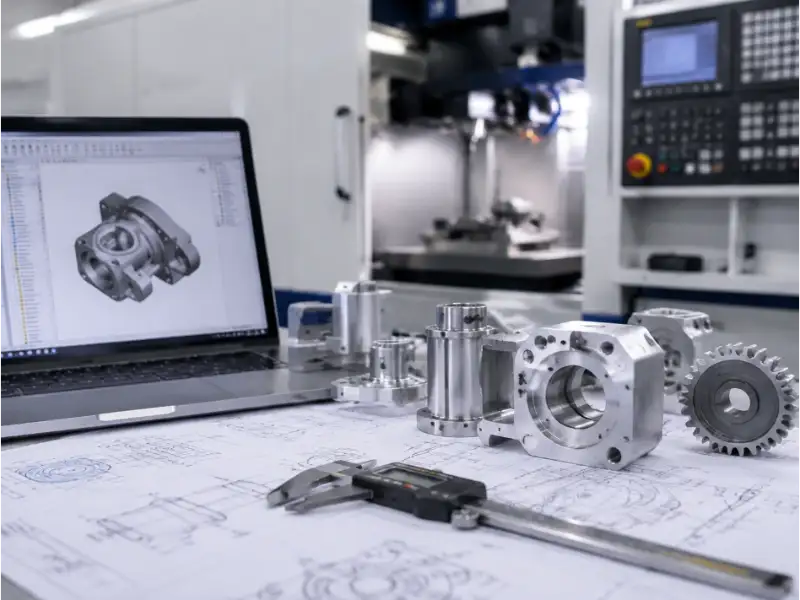
In the past, custom CNC machining often carried high costs.Key contributing factors included limited machine capability, lengthy manual programming and unstable production efficiency.Today, intelligent processing equipment has changed this landscape.Multi‑axis CNC machining centers reduce repeated workpiece clamping. Multiple surfaces can be machined in a single setup, lowering positioning errors and improving dimensional consistency.Meanwhile, automatic programming software, machining‑simulation systems and intelligent inspection equipment allow engineers to optimize tool paths in advance and cut trial‑machining iterations.For example:Before machining complex parts, simulation software verifies tool‑path rationality and prevents collisions or over‑cutting during production.Automatic tool‑change systems and robotic loading‑unloading reduce manual intervention and deliver stable productivity even for small‑batch custom parts.This constitutes a major reason why custom CNC machining has expanded into more industrial sectors.
Global manufacturing supply chains are transforming.When sourcing components, enterprises focus not only on price but also delivery speed, quality stability and supplier responsiveness.Previously, many enterprises relied on large standard‑part inventories to sustain production. Faced with expanding product variants, equipment upgrades and growing personalized client requirements, this approach creates heavy inventory pressure.For OEM manufacturers and engineering‑procurement teams, the cooperation model of “fast prototyping plus stable mass production” mitigates supply‑chain risks and accelerates project progress.The Asia‑Pacific region boasts well‑developed precision‑processing industrial chains, with clear strengths in machining capacity, production cost levels and delivery efficiency, making it a key sourcing destination for custom parts worldwide.
Environmental‑protection standards have become a critical assessment factor within industrial supply chains.More enterprises are paying attention to material utilization, energy consumption and environmental performance across production workflows. Custom CNC machining presents notable advantages in material efficiency.Well‑designed machining plans cut unnecessary machining allowances and boost material utilization rates.Moreover, modern CNC workshops widely deploy circulating cooling systems, minimum‑quantity lubrication technology and energy saving equipment to lower production‑phase energy consumption.For high‑standard industries such as aerospace and medical devices, precise control of material usage and machining workflows not only reduces costs but also aligns with green‑manufacturing trends. Haozhifeng Machinery integrates aluminum sand casting with finish CNC machining. By optimizing blank structures to reduce subsequent machining allowances, it improves material utilization and delivers more efficient manufacturing solutions for clients.
From a manufacturing‑trend perspective, industrial production is shifting from “finding suitable off‑the‑shelf parts” toward “manufacturing parts tailored to products”.Standard parts satisfy basic applications, yet custom machining delivers superior matching performance for special structures, high‑load operating environments and high‑precision assembly requirements.
Through custom CNC machining, enterprises can optimize the following for real‑world operating conditions:
‑ Part structure
‑ Material selection
‑ Weight control
‑ Assembly precision
‑ Service life