When buying metal hardware, most engineers first look at the material, dimensions, strength, and price. Surface finish often comes later.
This is changing.For many hardware parts, the surface is directly exposed to moisture, friction, chemicals, outdoor conditions, or repeated assembly. A suitable finish can prevent corrosion, reduce wear, and keep the part working as expected. An unsuitable finish can cause problems even when the basic machining and material selection are correct.This is why surface finish is getting more attention in hardware manufacturing.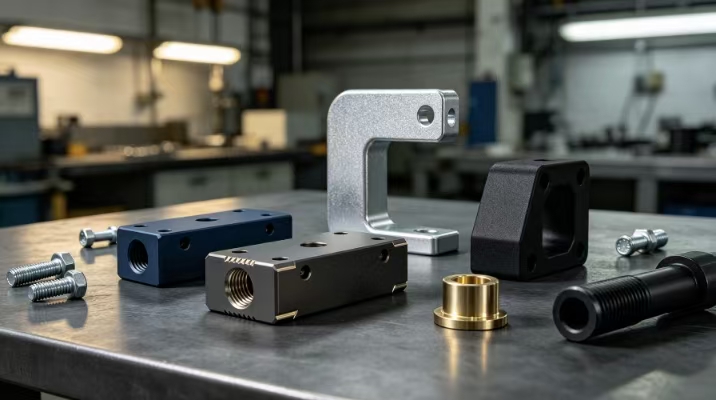
Surface treatment is often associated with color and appearance, but its main purpose is usually protection or performance.A carbon steel bracket used outdoors may need zinc plating or hot-dip galvanizing to slow down corrosion. An aluminum CNC machined part may use anodizing to improve corrosion resistance and surface hardness. For some structural parts, powder coating or painting provides additional protection against the working environment.The choice depends on where the part will be used.A finish that works well for an indoor machine component may not be suitable for a part exposed to rain or salt spray. In the same way, a coating selected for appearance may not be appropriate for a component with tight dimensional requirements.
Surface treatment can also create problems if it is not considered during machining.Take a CNC machined threaded part as an example. If a coating is added to the thread without allowing for its thickness, the finished part may become difficult to assemble. The same situation can occur with bearing seats, shafts, bushings, and other close-fitting components.For this reason, the machining drawing should normally indicate the surface treatment and the important dimensions after finishing.This is a small detail, but it can save a lot of trouble during assembly.
There is no universal surface treatment for metal hardware.Steel, stainless steel, aluminum, brass, and cast iron behave differently during finishing. The same process can produce different results depending on the material and the preparation of the surface.For example, aluminum parts are commonly anodized, while steel components may use zinc plating, black oxide, galvanizing, or powder coating. Cast parts may require additional cleaning, shot blasting, grinding, or painting before the final finish is applied.The manufacturing process also matters. A CNC machined surface is different from a sand-cast surface, so the preparation before finishing will not always be the same.
In industrial purchasing, the cheapest part is not always the lowest-cost option.If a bracket starts to rust after a short period of outdoor use, or a machined component wears quickly because the surface was not suitable for its application, replacement and maintenance costs can easily exceed the original price difference.This is one reason buyers are paying more attention to coating specifications, corrosion resistance, surface roughness, and the expected working environment when placing orders.
It also explains why surface treatment is increasingly included in technical drawings and RFQs rather than being left as a general finishing requirement.
At Haozhifeng, surface treatment is normally considered together with the material and machining process.For custom CNC parts, castings, stamping parts, brackets, bushings, and other metal components, the required finish can be selected according to the application and technical requirements.Common options include anodizing, zinc plating, hot-dip galvanizing, powder coating, black oxide, sandblasting, brushing, polishing, and painting.Before production, engineers can check whether the selected finish is suitable for the material, whether critical dimensions need to account for coating thickness, and whether certain areas need to be masked.This is particularly useful for parts that combine appearance requirements with tight tolerances.
A simple description such as “zinc plated” may not provide enough information for production.
Depending on the part, the drawing or RFQ may need to specify:
--Base material and grade
--Surface treatment
--Coating thickness, if required
--Color or appearance
--Corrosion resistance requirements
--Surface roughness
--Critical dimensions after finishing
--Areas that should not be coated
--Intended working environment
Clear requirements make it easier for the manufacturer to quote the job correctly and reduce misunderstandings during production.
As a custom metal parts manufacturer, Haozhifeng considers surface finish as part of the overall component specification.Depending on the material and application, finishing options can include anodizing, zinc plating, hot-dip galvanizing, powder coating, sandblasting, brushing, polishing, painting, and black oxide.For CNC machined parts, castings, stamped components, brackets, bushings, and other custom hardware, the finishing process can be selected according to the required appearance, corrosion resistance, dimensional tolerance, and operating conditions.The objective is simple: the surface treatment should improve the function and service life of the component, not just make it look better.