Did you know that industrial hardware procurement is undergoing notable changes in 2026? Against the backdrop of ongoing adjustments to global manufacturing supply chains, for CNC machined parts, metal components, aluminum alloy castings and custom hardware products, while price remains important, it is no longer the sole criterion for purchasers to evaluate suppliers. A growing number of overseas buyers are turning their attention to product quality, delivery stability, manufacturing capacity, supply‑chain risks and suppliers’ long‑term cooperation capabilities. For enterprises with continuous procurement needs, a stable and reliable supplier is often more valuable than one that simply offers lower quotations.
In the past, procurement teams usually made horizontal comparisons based on quotations from multiple suppliers. However, for custom‑made metal parts, the purchase price is only part of the final cost. For instance, a batch of CNC‑machined parts may come with a low quotation, yet subsequent issues such as dimensional deviations, unsatisfactory surface treatment, unstable mass‑production quality or delivery delays may force customers to bear extra costs including rework, remanufacturing, inventory adjustment and even production‑line shutdown.
Accordingly, a growing number of professional procurement teams have begun to focus on Total Cost of Ownership (TCO). Beyond product prices, they take into account quality‑related costs, logistics costs, delivery‑time risks, after‑sales costs and supplier management costs. This means buyers are not actually chasing the absolute lowest price, but suppliers that strike a reasonable balance among price, quality and delivery.
When it comes to the procurement of industrial components, qualified samples do not guarantee consistent performance in mass production.The final quality of CNC‑machined parts is associated with materials, equipment, cutting tools, machining parameters, process control and inspection procedures. Especially for precision parts with strict dimensional tolerances, consistency in mass production has a direct impact on customers’ subsequent assembly and application.Meanwhile, delivery lead time has become a key factor in procurement decisions. For global customers, supplier delays may further disrupt assembly schedules, inventory management and end‑product delivery.Therefore, overseas buyers typically evaluate suppliers comprehensively on their production capacity, quality control, lead‑time management and order‑fulfillment capabilities during supplier selection.Compared with suppliers that merely offer low prices, manufacturers capable of stably fulfilling bulk orders tend to secure more long‑term orders.
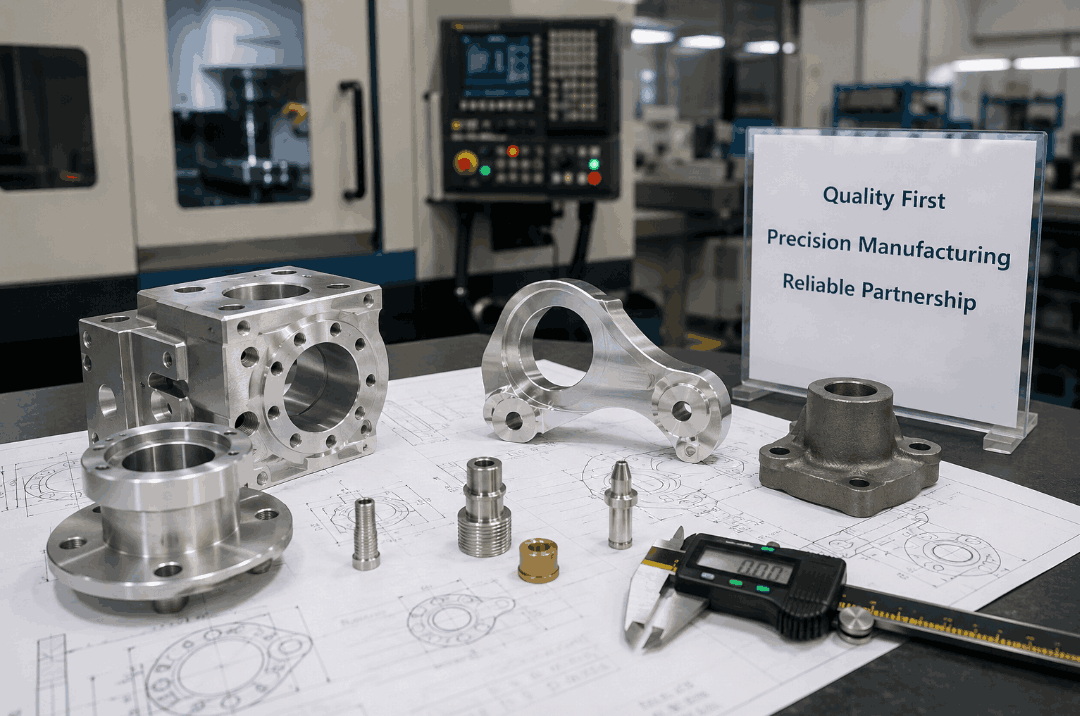
With the continuous development of industries such as mechanical equipment, automotive components, industrial automation, power equipment and engineering machinery, a growing number of industrial products need to be customized according to customer drawings. For purchasers, what they require is not merely a parts supplier, but a partner that can understand product requirements and deliver reasonable manufacturing solutions. For instance, HAOZHIFENG offers custom manufacturing services including CNC Milling, CNC Turning, Precision CNC Machining, Aluminum Parts Manufacturing, Metal Casting, as well as OEM/ODM, and can select appropriate processing methods based on product materials, structures, quantities and application requirements. For small‑batch products, greater emphasis can be placed on sampling efficiency and processing flexibility; for bulk orders, further consideration needs to be given to production efficiency, quality stability and overall manufacturing costs. This end‑to‑end capability spanning drawing confirmation, process evaluation and mass production is becoming increasingly vital for overseas purchasers.
HAOZHIFENG holds the view that the global procurement market in 2026 is gradually shifting from "price‑driven competition" to "comprehensive‑value‑driven competition".When procuring custom metal components, what customers truly need to take into account includes:
reasonable pricing, consistent quality, dependable lead times, matched manufacturing capabilities, and long‑term supplier collaboration.
Therefore, when handling custom projects, we focus not only on quotations themselves but also on drawing confirmation, material selection, processing techniques, quality control and delivery coordination.For overseas customers, reasonable pricing helps them cut procurement budgets, while consistent quality and reliable delivery can mitigate potential risks across their entire supply chain.